-
Looking For Authentic African Sheet Music? Here Are 10 Things You Should Know

For the modern conductor, the inquisitive researcher, or the passionate choir lead, the search for authentic African choral music can often feel like wandering through a vast, unmapped landscape. There is a deep, resonant beauty in the music that has emerged from the fertile soils of the African continent: melodies that drift like clouds over…
-
never give up on love (a tribute to barry white) (arr.)
-
Information about African Composers Edition (ACE)

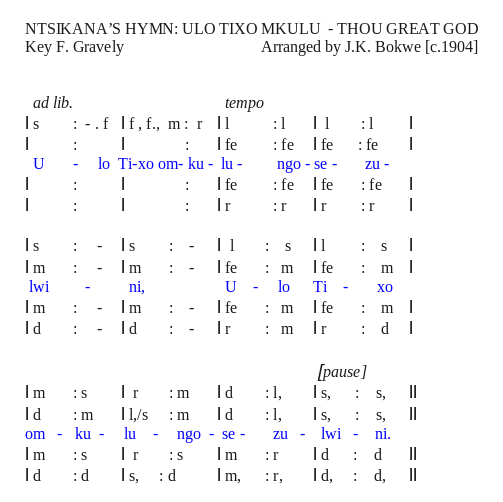
African Composers Edition (ACE) serves African composers and African music primarily by typesetting previously unpublished scores (sheet music). We specialise in transcribing and translating choral music in tonic solfa notation, recognising that few choirs worldwide can access this genre, but we also publish other genres of African art music, and jazz.
-
For Heike on Valentine’s Day

à la recherche de la paix et de la liberté is a trio by Surendran Reddy for clarinet, voice and piano (1993), dedicated to his long-time, devoted partner, Heike Asmuss, and rededicated to her now in his memory and with love. In this piece, Reddy arranges several well-known South African tunes including ‘Nkosi Sikelel’ iAfrika’,…
-
A new composition from a 19th-century hymn
Anyone brought up in Lesotho who attends the LEC (Lesotho Evangelical Church) will know the hymnal, Lifela tsa Zione, Songs of Zion. It is one of the oldest hymnbooks in southern Africa, first published in Morija in 1844 with words mainly by Swiss-French missionaries and tunes by early 19th century European composers. Lesotho’s indigenous composers…
-
Summertime in Lesotho

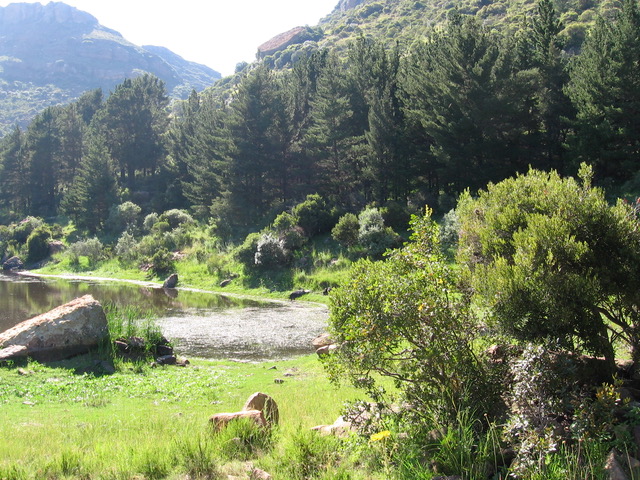
Mohapeloa’s Lehlabula (Summer) paints a lazy picture of drifting clouds, warmth, rain, and fertile mountain slopes.
-
M.M. Moerane Catalogue of Works
-
Acknowledgements
This edition could not have been completed without the generous financial assistance of the Andrew Mellon Foundation, New York and infrastructural support from Stellenbosch University, both of whom I heartily thank. I am particularly indebted to the Director of the African Open Institute for Music, Research and Innovation, Professor Stephanus Muller, for his belief in…
-
List of References
Brukman, Jeffrey. 2007. ‘Kárpáti’s “Mistuning” Theory Reconsidered in the Context of Bartók’s “Supradiatonicism” and Friedrich Hartmann’s “Fully Chromaticized Scales.’ Ex-tempore: A Journal of Compositional and Theoretical Research XIII(2), Spring/Summer 2007, [n.p.]. https://www.ex-tempore.org/brukman/brukman, accessed 12 May 2020. De Jager, Mr. 1969. Telex to Yvonne Huskisson, 8 May. Johannesburg: Southern African Music Rights Organisation, Yvonne Huskisson Collection…
-
General Introduction
Moerane’s Music and This Edition Moerane’s choral music constitutes the bulk of his output. It belongs to a genre whose beginnings have been ascribed to John Knox Bokwe in 1875 (Olwage 2010/2011), building into a choral tradition that now boasts hundreds of composers (Huskisson 1969; Lucia 2008, 11-12). Like his contemporaries, Moerane was inspired by…
-
Preface
This is the first published edition of all the extant compositions by South African-born Sotho composer Michael Mosoeu Moerane (1904-1980). Moerane may have composed as many as 87 works between the 1930s and the 1970s, the majority of them for unaccompanied choir to Sesotho, isiXhosa or English texts. Manuscripts or typescripts of only 51 of…
-
Pronunciation Guide to Sesotho Texts

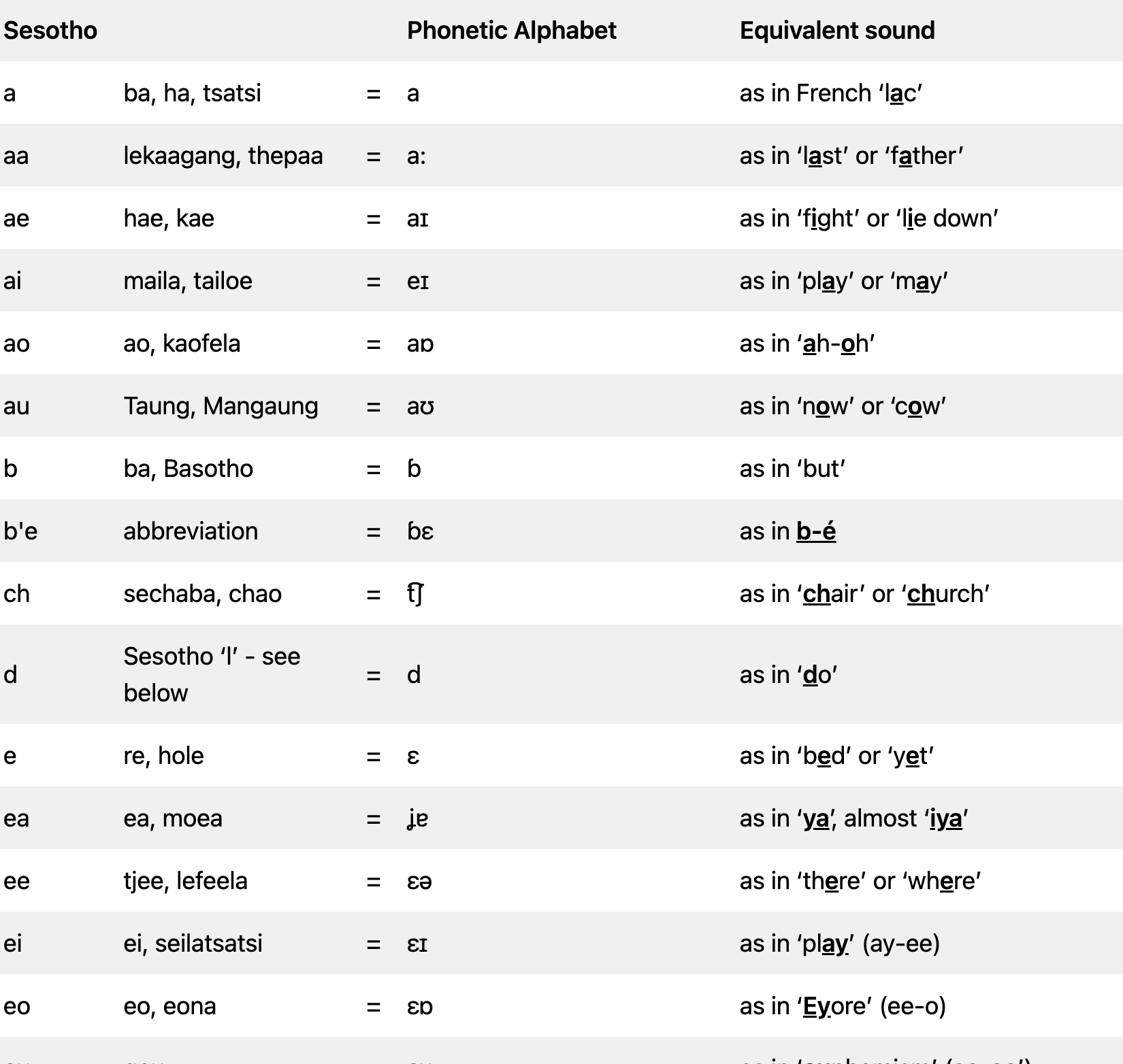
This guide is not a definitive document but a ‘rough guide’ to a language that has tricky pronunciation issues and is known to few people outside southern Africa.
-
List of Sources
List of Sources (download as PDF) African Music Society. [n.d., 1948a]. Form of Application for Membership. Cape Town: University of Cape Town Museums and Archives, P.R. Kirby Collection, file BC750/A. African Music Society. [n.d., 1948b]. List of Members at 30th April 1948. Cape Town: University of Cape Town Museums and Archives, P.R. Kirby Collection, file BC750/A. Ballantine, Christopher. 1993. Marabi Nights: Early South African Jazz and Vaudeville. Johannesburg: Ravan Press. Bent, Ian. 2002. ‘Steps to Parnassus: Contrapuntal Theory in 1725: Precursors and Successors’. The…
-
General Introduction to the Mohapeloa Critical Edition
Download this page as a PDF An African critical edition This Critical Edition brings together for the first time most of the music written by composer Joshua Pulumo Mohapeloa (1908-1982).((Evidence exists for more works than are included here, but authentic versions have yet to been found (see the end of the Catalogue of Works by J.P.…
-
History of African Music Scores

African choral music began to emerge as a genre in late-18th-century southern Africa after the arrival of European missionaries.
-
Catalogue of Works
Download the catalogue of works.
-
Pronunciation Guide
Pronunciation Guide to the Sesotho Texts in the J.P. Mohapeloa Critical Edition (download as PDF) This guide is not a definitive document but a ‘rough guide’ to a language that has tricky pronunciation issues and is known to few people outside southern Africa. Sesotho home-language speakers themselves do not always agree about spelling or pronunciation,…
-
Links
Here are some links related to the music available on ACE.
-
Performance

Most music in southern Africa has historically been performed by people who do not sing or play from written scores (see African Music Scores: History), but since the later 19th century notated music has increasingly been used, alongside orally transmitted music.
-
Instruments and Languages
The voice remains the most widespread ‘instrument’ in Southern Africa, largely because access to instrumental tuition has been impossible for most people, due to the inadequate funding of African music education over many decades.
-
Editing
Editing African choral music from southern Africa has to take into account several facts: works are written in tonic solfa notation, original manuscripts are rare, even published scores are; and the music belongs to a strong tradition of practice.
-
Publications by Mohapeloa
Meloli le Lithallere tsa Afrika I [African Songs and Extemporary Harmonizations book 1]. Foreword by Akim. L. Sello, Preface by J.P. Mohapeloa. Morija, Lesotho: Morija Sesuto Book Depot. 1935; 1853; 1977; 1983; 1988. [32 songs] Meloli le Lithallere tsa Afrika II. Morija, Lesotho: Morija Sesuto Book Depot. 1939; 1945; 1955; 1980; 1996. [32 songs] Meloli…
-
Sources of Information on Mohapeloa
Sources of information on Mohapeloa’s music include, most importantly, his own prefaces to the published songbooks (see Mohapeloa: Publications by Mohapeloa), where he explains his approach and aims. Most of these are in Sesotho, but the originals and English translations by Mantoa Smouse can be found below. (See Mohapeloa’s unpublished writings with translations by Mantoa…
-
About This Edition
This Critical Edition of Music by Joshua Pulumo Mohapeloa collects together for the first time all extant works published or in manuscript, by J.P. Mohapeloa (1908-1982). Download the General Introduction to the Mohapeloa Critical Edition to read about this edition in more detail. See also Mohapeloa: Mohapeloa Biography and African Choral Music: Music’ elsewhere on this website.The…
-
Editing Process
The process of editing Mohapeloa’s involves two stages that overlap: the first is transcribing a tonic solfa score into staff notation, which means typesetting the basics; the second is editing the transcribed score, which involves some degree of interpretation by the editor. Transcribing The following extract from Mohapeloa’s Tsohang in tonic solfa and a staff…